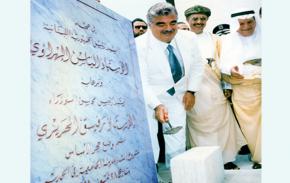
إن اسهامات رفيق الحريري الخيرية والإنمائية لا تحصى، وأبرزها المساعدات المتعددة الأوجه لستة وثلاثين ألف طالب جامعي في جامعات لبنان وخارجه
أنت هنا
COLLECTION AND MANAGEMENT OF SATELLITE DATA FOR HYDROLOGICAL MODELS
التبويبات الأساسية
Kamie C. KITMITTO
|
Univ. |
London |
Spec. |
Surveying Engineering |
Deg. |
Year |
Pages |
|
Ph.D. |
1990 |
360 |
This thesis reports on the development of a system for the acquisition of AVHRR data, the processing of this data into hydrological parameters then the organization and management of this data .
The derivation of hydrological parameters through the use of remote sensing data has been well reported in the literature. The integration of the different derived estimates into a uniform and integrated set of data for use in Hydrological models have been lacking. The aim of this project is the presentation of a system that solves and presents the problems faced in the development of such a system.
This thesis is concerned with the integration of a set of methods, each concerned with a hydrological parameter, into a compatible system for the remote sensing estimation of hydrological parameters. The information produced by remote sensing methods are populous in space. A system is needed to manage this significant body of generated data. A database was selected and used for this task.
The proposed system is a prototype system concerned primarily with an investigation of the different processes involved in the integration of the different methods into a compatible package. The system evolved, with the introduction of the database in the system, to become an embryonic Hydrology and Remote Sensing Information System acronymed as HyRSIS.
Programs used in this project compose of two kinds, written in house and 'acquired' from different researchers. Compatibility of programs and data files was solved and then used as building blocks of HyRSIS.
A main program was used as driver for the interaction with the different programs. A design criterion was established for future development of such a system. The system provided solutions for two, the problems of the big size of the data and the non suitability of remote sensing data hydrological modeling. The use of the database provided the housing and the managing tool for the bulk of the data. A protocol for the retrieval of data from the database was established .
For the first time the hydrological model used, in this project and probably for any hydrological model, was run using several parameters derived from remote sensing sources and supplemented by conventional data. The same model was also run using conventional data , as a prime source, and supplemented with remote sensing data.