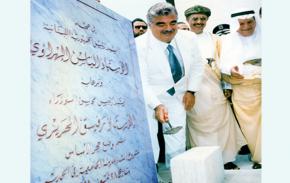
إن اسهامات رفيق الحريري الخيرية والإنمائية لا تحصى، وأبرزها المساعدات المتعددة الأوجه لستة وثلاثين ألف طالب جامعي في جامعات لبنان وخارجه
أنت هنا
DEPOSITION OF CERAMIC FIBERS IN THE GUINEA PIG LUNGS
التبويبات الأساسية
Bassam H. ATIEH
|
Univ. |
Tulane |
Spec. |
Environmental Health |
Deg. |
Year |
#Pages |
|
D.Sc. |
1989 |
271 |
Asbestos fibers have hemolytic activity and cytotoxic potency to macrophages in vitro cultures. In vivo, Asbestos also clearly caused diseases such as fibrosis, lung cancer, a mesothelioma. Since the toxic properties of asbestos are size related, long and thin NIMMF may also induce similar effects if they maintained their integrity in lung tissues. This study was undertaken to determine the deposition of ceramic fibers in guinea pig lungs. It was a part of an effort to predict the potential health effects of man‑made, mineral fibers (MMMF) in general and of ceramic fibers in particular. The objectives of this study were to determine the deposition/retention and clearance rates of various fiber sizes in the respiratory system of the guinea pig and to evaluate the factors influencig these activities.
Nineteen male Hartly albino guinea pigs (GP) were exposed by inhalation (nose only) to a polydipersed ceramic fiber dust at a concentration of 297±25.5 fibers/cc of air, for 6 continuous hours. Minute volume for each individual guinea pig was determined by applying Guyton's equation. Exposed animals were divided into three groups; group (1) was sacrificed immediately following exposure, group (II) 24 hours later and group (III) 5 days later.
Trachea and lung lobes of each animal were carefully separated, digested with Clorox bleach and filtered on membrane filters. The nasopharyngeal airways were washed three times with 10 ml of saline and the wash fluid was added to the trachea's samples. The average total number of fibers recovered from the entire respiratory tract (ERT) of groups I, II and III were 8.5± 0.73 , 7.6 ± 0..56, and 6.2 ± 0.69 million fibers/ GP. Overall fiber retention as percent of inhaled fibers for the three groups were 30.8 ± 1.61, 27.1 ±1.33, and 21.9 ± 1.66. The CML arid CMD of fibers recovered from the lungs decreased slightly from 10.6 µm and 0.76 µm in the first group to 9.95 µm and 0.75 µm in the second group and to 9.25 µm. and 0.71 µm in the third group.
Concentration and size distribution of fibers in the lobes indicated that fiber retention, CML and CMD were not dependent on the size of lobe. The highest and lowest eveness indices among all lobes of animals in the three groups were consistantly for the upper left lob (UL) and the middle left lobe (ML) respectively.
Results also showed that. the short‑ term clearance of fibers was associated with two clearance half‑lives; the first was about 25 hours representing fast clearance in the ciliated airways, and the second was about 362 hours representing slow clearance of fibers in the non‑ciliated airways or the pulmonary compartment.
The results also indicated that the impaction equivalent diameter (Die) and mass equivalent Diameter (Dme) are more efficient descriptors of fiber retention in the lungs in comparison to the conventional aerodynamic equivalent diameter (Dae).