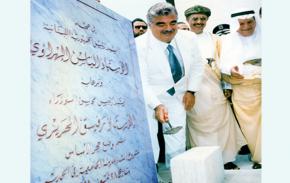
إن اسهامات رفيق الحريري الخيرية والإنمائية لا تحصى، وأبرزها المساعدات المتعددة الأوجه لستة وثلاثين ألف طالب جامعي في جامعات لبنان وخارجه
أنت هنا
MANAGEMENT METHODS AND COMPUTER APPLICATIONS IN ARCHITECTURAL DESIGN
التبويبات الأساسية
Zahi A. NAAMANI
|
Univ. |
Nottingham |
Spec. |
Architectural Engineering |
Deg. |
Year |
#Pages |
|
Ph.D. |
1991 |
284 |
Architectural design is a complicated process which deals with various inputs, involves different professions, and usually has many constraints, in particular, time and money. Decisions taken during the design process, especially at the early stages, have a high influence on a project, its construction, costs, and life thereafter. Management aspects are crucial factors, which can, when properly applied, improve design performance, especially with the speedy technological advances and the increasing diversity in specialization and professionalism. Good planning, organization, co-ordination and control are needed to properly manage the design process and to ensure that all decisions taken satisfy the project objectives and impact on the whole project.
Architects, acting as design managers, need to have good managerial skills as well as architectural skills to ensure that a project runs its course to a high standard within the time limits and within the budget costs. They need to manage their design team by applying good organizational structures, which define authorities and responsibilities and ease communications between different team members.
Management methods, techniques, and computer applications are well established and used in many other major industries, particularly the manufacturing industry. Architects need specific management techniques and computer applications tailored to operate in the unique architectural design environment, to enrich them with information, which help in the decision-making process.
This research investigates the different parameters or the design process and their effect on improving design performance. It reviews different management techniques, which are applicable to managing the design process, and suggests some manual techniques and computer applications.
It concludes that improving the performance of architectural design depends on various management aspects, which can be tackled by applying effective management methods and computer applications.